
Tokyo Fuzoku — Soaplands, Pink Salons, and Japan's $24 Billion Pink Zone
How Japan rebuilt its sex industry around legal loopholes — soapland, pink salon, fashion health, delivery health
This episode hasn't been released yet. Subscribe to be notified when it drops.
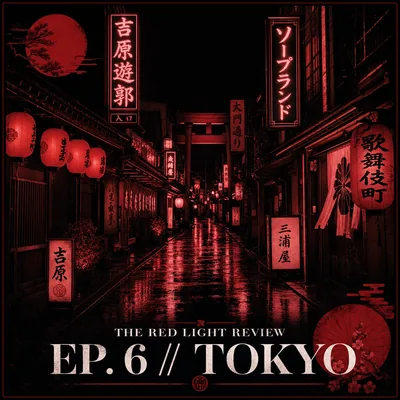
It is past 10 p.m. on a Wednesday in the Yoshiwara district of Tokyo's Taitō Ward. The address does not exist on Google Maps. The neighborhood has been expunged from the city's official cartography for sixty years, yet the street is not hard to find: a tight grid of low buildings glowing amber and pink, each fronted by a suited man in his thirties who says nothing until a car rolls to a stop. Then he opens the door.
Inside, the customer chooses from a laminated photo binder. " A woman leads him to a private room: a wet-play area with a specially designed chair (the suke-isu, engineered for access to every part of the body), a deep bath, an inflatable mat. An hour or more later, he leaves. No receipt specifies what occurred in that room.
The police, whose station sits eleven minutes on foot from the district's center, do not ask.
This is Yoshiwara in 2024 — not the Edo pleasure quarter of ukiyo-e prints and silk-clad oiran, but its legal descendant: roughly 120 soapland establishments operating in a space that technically does not exist. They are the apex of a $24-billion industry, 2.3 trillion yen a year, built entirely around a 68-year-old law that prohibits one specific act while leaving everything else in what Jake Adelstein called "not a grey zone but a pink zone."
The other side of the loophole: pink salons. Where soaplands occupy the top of the pyramid at ¥30,000-and-up sessions, pink salons (ピンサロ, pinsaro) sit at the budget tier — Japan's structural answer to the Bangkok BJ bar. Oral-only, on-premises, in curtained booths in a shared room: no shower, no private door, no penetration.
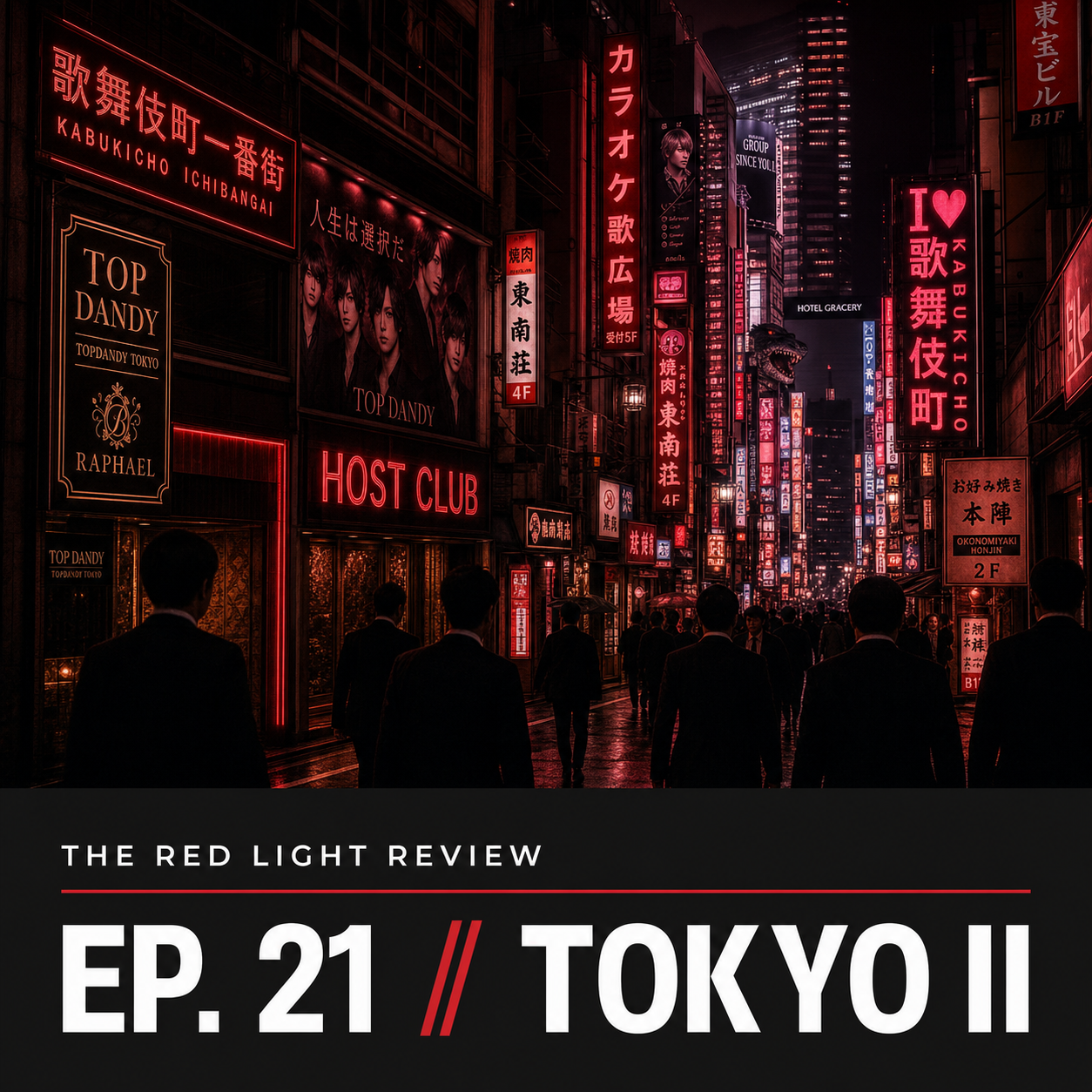
Beer and snacks are served, which is exactly the point — food service registers the place as a restaurant under the 1956 Anti-Prostitution Law rather than a sex venue. Sessions run 20 to 60 minutes; prices range from ¥3,000 in working-class neighborhood spots like Otsuka up to ¥14,000 at upper-tier evening venues in Kabukicho.
Over a thousand pink salons operate in Kabukicho and Osaka's Dotonbori alone. Workers may see up to 50 customers a day. The pink salon is the gateway tier — where a worker builds the skill and stamina to move into soapland work at three to five times the per-customer revenue.
Around this two-pole structure sits a constellation of further euphemistic categories — fashion health, hotel health, delivery health, sexy kyabakura, kyabakura, the older hostess clubs — each mapped precisely onto a different niche in the same 1956 law. The names change at every border. The underlying transactions are convergent.



Comments